Introduction
Fonendi is an innovative smart stethoscope technology that combines traditional auscultation with artificial intelligence to enhance diagnostic accuracy in healthcare settings.
This advanced medical device represents a significant leap forward in how healthcare providers detect and analyze heart and lung sounds during patient examinations.
Modern healthcare demands precision, efficiency, and accessibility. Traditional stethoscopes have served medical professionals for nearly two centuries, but technology has now evolved to address their inherent limitations.
Smart stethoscopes integrate digital capabilities that amplify sounds, record patient data, and provide AI-assisted analysis to support clinical decision-making.
This comprehensive guide explores how this technology works, its clinical applications, benefits for healthcare providers, and its role in shaping the future of patient care.
Whether you’re a healthcare professional considering adoption or simply curious about medical innovation, this article provides valuable insights into this transformative diagnostic tool.
Understanding Smart Stethoscope Technology
Smart stethoscopes represent the next generation of diagnostic instruments in modern medicine. These devices maintain the essential function of traditional stethoscopes while adding digital enhancement capabilities that significantly improve their utility.
The core technology captures acoustic signals from the body and converts them into digital data. This process allows for amplification, noise reduction, and detailed analysis that surpasses human hearing capabilities alone.
Healthcare providers can visualize sound waves, record examinations, and share findings with colleagues or specialists for consultation.
How Digital Auscultation Works
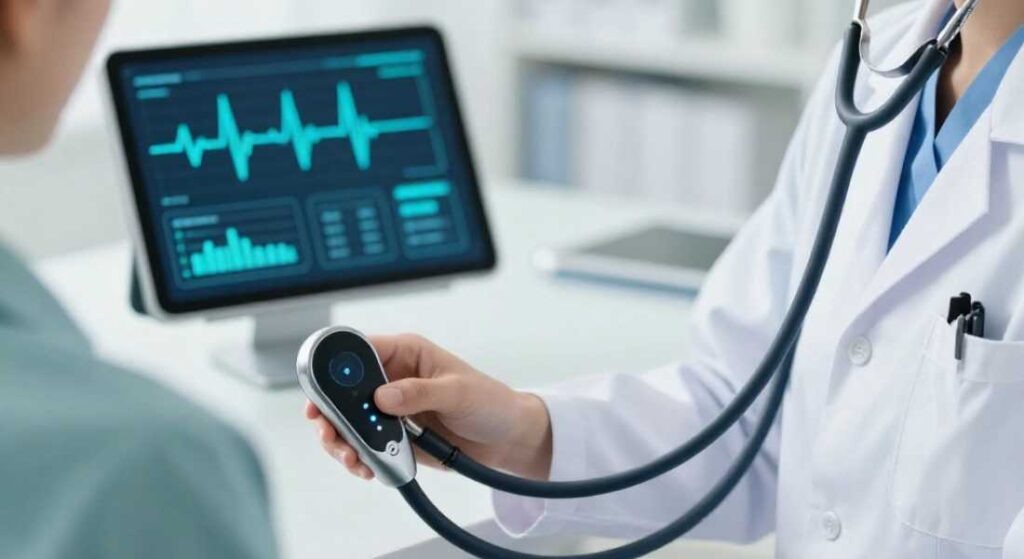
Digital auscultation transforms physical sound vibrations into electronic signals. High-sensitivity sensors capture even the faintest cardiac and pulmonary sounds that might be missed with conventional equipment.
The device processes these signals through advanced algorithms that filter out ambient noise and enhance clinically relevant frequencies.
This technology enables real-time visualization of acoustic patterns on connected devices. Clinicians can see waveforms corresponding to heartbeats, murmurs, and respiratory sounds, adding a visual dimension to traditional listening techniques.
This dual sensory approach increases diagnostic confidence and reduces the likelihood of missing subtle abnormalities.
Artificial Intelligence Integration
AI-powered analysis represents one of the most significant advantages of smart stethoscope technology. Machine learning algorithms trained on millions of heart and lung sound recordings can identify patterns associated with various conditions.
The system compares patient sounds against extensive databases to flag potential abnormalities.
These intelligent systems don’t replace clinical judgment but rather augment it. They serve as a second opinion, highlighting findings that warrant closer attention.
For less experienced practitioners, this guidance proves invaluable in developing auscultation skills and preventing diagnostic errors.
Clinical Applications and Diagnostic Benefits
Healthcare providers utilize fonendi technology across numerous clinical scenarios where accurate cardiovascular and respiratory assessment is essential.
The versatility of these devices makes them suitable for primary care, emergency medicine, cardiology, pulmonology, and pediatrics.
Early detection of cardiac abnormalities becomes more achievable with enhanced sound quality and AI assistance. Conditions such as heart murmurs, arrhythmias, and valvular disorders produce characteristic acoustic signatures that the technology helps identify.
This early recognition enables timely referrals to specialists and appropriate intervention.
Cardiovascular Assessment
Cardiac auscultation requires significant skill and experience to interpret correctly. Smart stethoscopes lower the barrier by providing visual representations of heart sounds and automated detection of irregular patterns.
Healthcare providers can distinguish between benign flow murmurs and pathological conditions with greater confidence.
The technology proves particularly valuable in detecting subtle changes over time. By comparing recordings from previous visits, clinicians can track disease progression or treatment effectiveness. This longitudinal monitoring capability adds depth to patient management strategies.
Respiratory Evaluation
Pulmonary conditions produce diverse breath sounds that indicate specific pathologies. Wheezes, crackles, rhonchi, and stridor each suggest different underlying issues.
Advanced stethoscope technology enhances these sounds and helps differentiate between similar acoustic patterns that might confuse even experienced clinicians.
Respiratory assessment benefits enormously from noise cancellation features.
\Environmental sounds in busy clinical settings often interfere with traditional auscultation. Digital filtering removes these distractions, allowing clear evaluation of lung sounds even in less-than-ideal conditions.
Advantages for Healthcare Providers
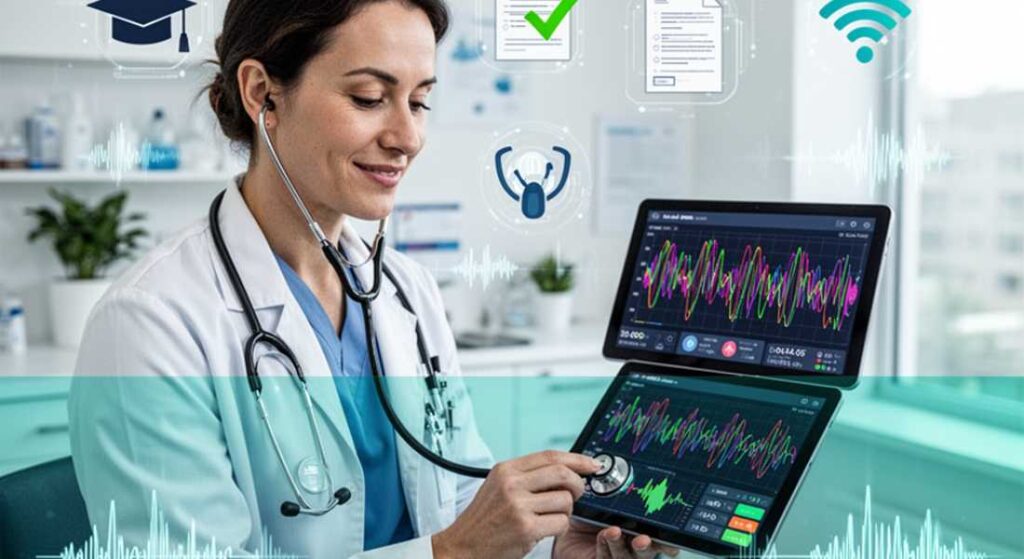
Medical professionals who adopt fonendi solutions experience multiple benefits that enhance their clinical practice and patient care delivery. These advantages extend beyond diagnostic accuracy to include workflow efficiency, documentation, and professional development.
Enhanced sound amplification addresses a common challenge in clinical practice. As healthcare providers age or work in noisy environments, their ability to hear subtle sounds may diminish.
Digital amplification compensates for these limitations without compromising sound quality or diagnostic capability.
Improved Documentation and Record Keeping
Recording capabilities transform how clinicians document physical examinations. Instead of relying solely on written descriptions, providers can save actual audio recordings as part of the patient’s medical record.
This objective documentation proves valuable for quality assurance, medicolegal purposes, and continuity of care.
Recorded examinations can be reviewed by other team members or specialists without requiring the patient’s presence.
This consultative capability streamlines referral processes and enables expert opinions on complex cases. The ability to share recordings securely through digital platforms facilitates collaborative care models.
Telemedicine and Remote Patient Monitoring
The rise of telehealth has created demand for tools that enable comprehensive remote assessments.
Smart stethoscope technology bridges the gap between in-person and virtual care by allowing patients or healthcare workers to capture high-quality auscultation data from remote locations.
This capability proves especially valuable for patients in rural areas, those with limited mobility, or during public health emergencies when minimizing in-person contact becomes necessary.
Clinicians receive diagnostic-quality audio data that supports clinical decision-making without requiring office visits.
Educational Value and Skill Development
Medical students and residents benefit tremendously from technology that makes learning auscultation more accessible.
Traditional teaching methods rely on patients with specific conditions being available during training sessions. Digital recordings create libraries of pathological sounds that students can review repeatedly.
Visual waveform displays help learners understand what they’re hearing and recognize patterns more quickly.
This multi-modal learning approach accelerates skill acquisition and builds diagnostic confidence. Instructors can provide feedback on student interpretations using objective audio data rather than subjective descriptions.
Patient Benefits and Care Quality
While healthcare providers gain professional advantages, patients experience improved care quality through more accurate diagnoses and enhanced clinical interactions. The technology creates opportunities for better engagement and understanding of their health conditions.
Accurate early detection of cardiac and pulmonary conditions leads to better health outcomes.
When abnormalities are identified sooner, treatment can begin before conditions become severe or irreversible. This proactive approach aligns with preventive medicine principles and potentially reduces healthcare costs.
Enhanced Patient Engagement
Visual displays of heart and lung sounds fascinate patients and create opportunities for meaningful discussions about their health.
Seeing waveforms corresponding to their heartbeat or breathing makes abstract medical concepts tangible. This visualization helps patients understand their conditions and the importance of treatment adherence.
Shared decision-making becomes more effective when patients can literally see and hear what clinicians are evaluating.
This transparency builds trust and helps patients feel more involved in their care. When people understand their health issues better, they’re more likely to follow treatment recommendations.
Reduced Diagnostic Delays
Traditional diagnostic pathways often require multiple appointments and referrals before reaching accurate conclusions.
Smart stethoscope technology can shorten these timelines by providing more definitive information during initial evaluations. AI-assisted analysis flags concerning findings immediately, enabling faster specialist referrals.
This efficiency particularly benefits patients with time-sensitive conditions where delays in diagnosis could lead to complications.
Cardiovascular and respiratory emergencies require rapid identification and intervention. Enhanced diagnostic capabilities support better triage decisions and appropriate urgency in treatment initiation.
Technology Specifications and Features

Modern smart stethoscopes incorporate sophisticated engineering to deliver clinical-grade performance. Understanding the technical specifications helps healthcare organizations make informed purchasing decisions and ensures compatibility with existing systems.
Battery life varies among models but generally supports full-day clinical use on a single charge. Wireless connectivity through Bluetooth enables seamless integration with smartphones, tablets, and computers.
Some devices include internal memory for storing recordings when immediate data transfer isn’t possible.
Sound Quality and Frequency Response
High-fidelity audio capture requires sensors capable of detecting sounds across the full range of clinically relevant frequencies.
Human hearts and lungs produce sounds from very low frequencies around 20 Hz to higher frequencies exceeding 1000 Hz. Quality devices capture this entire spectrum without distortion.
Amplification capabilities typically range from 10 to 100 times normal acoustic volume. Users can adjust amplification levels based on their hearing ability and the specific clinical situation. Some models include automatic gain control that optimizes sound levels based on input signals.
Connectivity and Integration
Interoperability with electronic health record systems streamlines documentation workflows. Direct integration allows recorded auscultations to be saved automatically to patient charts without manual file transfers. This seamless connectivity reduces administrative burden and improves data accessibility.
Cloud-based platforms enable storage, analysis, and sharing of auscultation data across healthcare networks. Secure transmission protocols protect patient privacy while allowing authorized users to access recordings for consultations or second opinions.
Mobile applications provide intuitive interfaces for controlling device functions and reviewing findings.
Implementation Considerations for Healthcare Facilities
Organizations considering adoption of fonendi technology should evaluate several factors to ensure successful implementation. These considerations span technical requirements, staff training, workflow integration, and cost-benefit analysis.
Infrastructure requirements typically include reliable wireless networks and device compatibility with existing IT systems.
Healthcare facilities must ensure adequate cybersecurity measures protect patient data transmitted and stored through smart stethoscope platforms. Compliance with healthcare privacy regulations remains paramount.
Training and Adoption Strategies
Successful implementation requires comprehensive staff training on both technical operation and clinical interpretation of enhanced auscultation data.
Training programs should address device functionality, AI-assisted analysis features, data management, and troubleshooting common issues.
Change management strategies help overcome resistance to adopting new technology. Some clinicians may initially prefer traditional methods they’ve used throughout their careers.
Demonstrating clear benefits through pilot programs and showcasing success stories from early adopters can build enthusiasm and acceptance.
Cost Analysis and Return on Investment

Initial acquisition costs vary depending on device specifications and the number of units required.
Organizations must balance upfront expenses against long-term benefits including improved diagnostic accuracy, reduced referral costs, enhanced billing documentation, and potential reduction in malpractice risk.
Maintenance costs include software updates, battery replacements, and technical support. Many manufacturers offer service contracts that provide ongoing support and ensure devices remain current with latest AI algorithms and features. These predictable expenses help with budget planning.
Future Developments and Innovation Trends
The field of smart stethoscope technology continues evolving rapidly as artificial intelligence capabilities expand and hardware becomes more sophisticated. Understanding emerging trends helps healthcare organizations make forward-looking investment decisions.
Machine learning algorithms will become increasingly accurate as they train on larger datasets encompassing diverse patient populations.
Future systems may detect conditions earlier and with greater specificity than current versions. Integration of multiple vital sign monitoring capabilities into single devices represents another development trajectory.
Predictive Analytics and Preventive Care
Next-generation systems may move beyond diagnostic assistance to predictive analytics. By analyzing subtle changes in cardiac or pulmonary sounds over time, AI could forecast deterioration before clinical symptoms appear.
This predictive capability would revolutionize chronic disease management and preventive care strategies.
Wearable versions that enable continuous monitoring represent another frontier. Patients with chronic heart or lung conditions could benefit from ongoing auscultation that alerts healthcare providers to concerning changes requiring intervention.
This shift from episodic to continuous monitoring aligns with broader healthcare trends toward proactive management.
Global Health Applications
Smart stethoscope technology holds tremendous promise for improving healthcare access in resource-limited settings.
Communities lacking specialist physicians could leverage these devices to receive expert diagnostic opinions remotely. This democratization of specialized knowledge could reduce global health disparities.
Cost reduction through mass production and simplified designs tailored for low-resource environments will expand accessibility.
Solar-powered or extremely long-battery-life versions could serve areas with unreliable electricity. Ruggedized designs suitable for challenging environmental conditions would further broaden applicability.
FAQs
What makes fonendi different from traditional stethoscopes?
Fonendi technology incorporates digital sensors, sound amplification, AI-assisted analysis, and recording capabilities that traditional acoustic stethoscopes lack.
These features enhance diagnostic accuracy by making subtle sounds more audible and providing objective documentation of findings. The technology also enables telemedicine applications and facilitates sharing of auscultation data with specialists.
How accurate is AI-assisted auscultation analysis?
AI algorithms achieve accuracy rates comparable to or exceeding experienced cardiologists in detecting common cardiac abnormalities when trained on extensive datasets.
However, the technology serves as a diagnostic aid rather than a replacement for clinical judgment. Healthcare providers should interpret AI findings within the context of complete patient assessments and use them to inform rather than determine clinical decisions.
Can patients use these devices at home?
Some smart stethoscope models are designed for home use under healthcare provider guidance. Patients with chronic conditions can perform self-monitoring and transmit recordings to their medical teams for review.
However, proper placement technique and interpretation require professional oversight. Most clinical-grade fonendi devices are intended for use by trained healthcare professionals.
Does insurance cover smart stethoscope examinations?
Coverage varies by insurance provider and specific clinical circumstances. Many insurers reimburse standard auscultation as part of physical examination codes regardless of whether traditional or digital stethoscopes are used.
Documentation quality improvements may support better reimbursement rates. Healthcare providers should verify coverage policies with individual payers.
How long do recordings need to be stored?
Storage requirements follow the same medical record retention laws applicable to other clinical documentation.
Most jurisdictions require maintaining medical records for minimum periods ranging from five to ten years, with longer retention for pediatric patients. Healthcare organizations should consult legal counsel regarding specific requirements in their jurisdictions.
What training is required to use smart stethoscopes effectively?
Basic operation typically requires only brief orientation covering device controls, sound adjustment, and recording functions. Clinical interpretation training depends on the user’s existing auscultation skills.
Healthcare providers already proficient in traditional auscultation can quickly adapt to enhanced capabilities. Less experienced users benefit from structured training programs covering both technical and interpretive aspects.
Conclusion
Smart stethoscope technology represents a significant advancement in diagnostic medicine that enhances healthcare provider capabilities while improving patient care quality.
By combining traditional auscultation principles with digital innovation and artificial intelligence, these devices address longstanding limitations of conventional stethoscopes.
Healthcare organizations and individual practitioners who embrace this technology position themselves at the forefront of modern medicine.
The benefits span improved diagnostic accuracy, enhanced documentation, expanded telemedicine capabilities, and better patient engagement. As the technology continues evolving, its role in routine clinical practice will likely expand further.
For patients, these innovations mean earlier detection of potentially serious conditions, more thorough evaluations, and greater involvement in their healthcare journeys. The future of auscultation is digital, intelligent, and more accessible than ever before.