
Introduction
When do kids lose their first tooth is one of the most common questions parents ask as their children grow. This natural milestone typically begins around age six, though the timing can vary significantly from child to child.
Understanding the tooth loss process helps parents recognize what’s normal and when to consult a dentist.
This comprehensive guide covers everything you need to know about your child’s first lost tooth, including age ranges, what to expect, and how to handle early or delayed tooth loss.
Understanding Baby Teeth and When They Fall Out
Baby teeth, also known as primary teeth, play a crucial role in your child’s development. These 20 teeth begin emerging around six months of age and serve important functions until permanent teeth are ready to replace them.
The process of losing baby teeth is called exfoliation. It happens when permanent teeth developing beneath the gums start pushing upward, causing the roots of baby teeth to dissolve gradually. This natural process loosens the tooth until it eventually falls out.
The Typical Age Range for Losing First Teeth
Most children lose their first tooth between ages five and seven. The average age is around six years old, which is why kindergarten and first-grade classrooms often have children displaying gap-toothed smiles.
However, this timeline is just an average. Some children start losing teeth as early as four years old, while others may not lose their first tooth until age seven or slightly later. Both scenarios can be completely normal.
Which Teeth Children Lose First
The bottom front teeth, called lower central incisors, are typically the first to go. These are usually the same teeth that erupted first as baby teeth. After the bottom front teeth, children typically lose their top front teeth next.
This pattern follows the same order in which baby teeth originally appeared. Understanding this sequence helps parents anticipate which teeth will become loose next.
Is It Normal for Young Children to Lose Teeth Early?
Seeing your four-year-old or five-year-old with a loose tooth can surprise many parents. Early tooth loss does happen and often falls within the normal range of development.
Five-Year-Olds Losing Teeth
A five-year-old losing bottom teeth is quite common and generally not a cause for concern. Many children begin their tooth loss journey at this age, particularly if they got their baby teeth earlier than average.
If your five-year-old is losing teeth, ensure they maintain good oral hygiene to keep the gums healthy as permanent teeth prepare to emerge. The new teeth may take several weeks or months to fully grow in.
Four-Year-Olds Losing Teeth
Losing a first tooth at four years old is less common but can still be normal. Some children simply develop faster than others. If your four-year-old loses a tooth naturally without injury, it likely means their permanent teeth are ready to come through.
However, if tooth loss at age four results from trauma, decay, or appears accompanied by other symptoms, consult your pediatric dentist. They can ensure proper development is occurring and check that permanent teeth are forming correctly underneath.
What Happens When Children Don’t Lose Teeth on Schedule?
Just as early tooth loss concerns some parents, delayed tooth loss worries others. Variations in timing are usually normal, but understanding what might cause delays helps parents know when to seek professional advice.
Seven-Year-Olds Who Haven’t Lost Teeth
If your seven-year-old hasn’t lost any teeth yet, this situation deserves attention but not necessarily alarm. Some children are simply late bloomers. Genetics plays a significant role in tooth loss timing.
Schedule a dental visit if your child reaches age seven without any loose teeth. Your dentist can take X-rays to confirm that permanent teeth are developing normally beneath the gums. In most cases, the teeth will fall out naturally once given a bit more time.
Factors That Affect Tooth Loss Timing
Several factors influence when do kids lose their first tooth. Genetics is the primary factor—if parents lost teeth late, their children often follow the same pattern.
Other influences include nutrition, overall health, and the age when baby teeth first erupted. Children who got their first tooth later than average typically lose teeth later too.
The Order of Tooth Loss Throughout Childhood
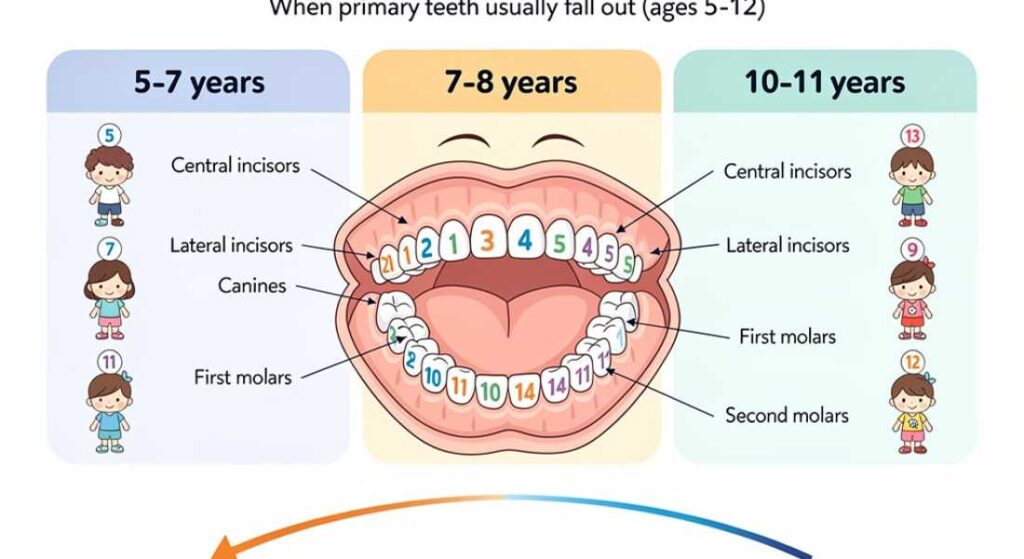
Understanding the complete sequence of tooth loss helps parents know what to expect over several years.
Primary Tooth Loss Pattern
After the front bottom and top teeth fall out, children typically lose their lateral incisors next. These are the teeth on either side of the front teeth. This usually happens between ages seven and eight.
Around ages nine to eleven, children lose their first molars and canines. The second molars, which are the back baby teeth, typically fall out last, around ages ten to twelve.
Which Teeth Fall Out at Age Ten
By age ten, most children have lost their front eight teeth and are working on their back teeth. The first molars and canines become loose during this period. Some children may also begin losing their second molars, though this more commonly occurs around age eleven or twelve.
This is a busy time for tooth loss, and children may have several loose teeth simultaneously. Reassure them that this is completely normal.
When Children Stop Losing Teeth
When do kids stop losing teeth is another question parents frequently ask. Most children finish losing their primary teeth by age twelve or thirteen. However, some children may lose their last baby tooth as late as age fourteen.
After all baby teeth fall out, children should have 28 permanent teeth. The final four teeth, called wisdom teeth, typically emerge in late adolescence or early adulthood.
How to Help Your Child Through Losing Their First Tooth
This milestone can be exciting but also scary for young children. Parents play an important role in making the experience positive.
What to Give Your Child When They Lose Their First Tooth
Many families celebrate this milestone with special traditions. The tooth fairy is a popular custom that makes losing teeth exciting rather than frightening.
Consider creating a special tooth fairy box or pillow to hold lost teeth. Some parents give money, small toys, or write personalized letters from the tooth fairy. The amount or gift matters less than making your child feel special and proud of growing up.
Beyond tooth fairy traditions, you might take a photo to commemorate the moment, let your child call a grandparent to share the news, or add the date to a baby book.
Managing Loose Teeth Safely
When a tooth becomes loose, let your child wiggle it naturally with their tongue or clean fingers. Avoid forcing a tooth out before it’s ready, as this can cause unnecessary pain or bleeding.
If a tooth is very loose and bothering your child during meals, they can gently wiggle it more deliberately. Most teeth will fall out on their own during eating or brushing.
Caring for the Gap After Tooth Loss
After the tooth falls out, have your child rinse their mouth with water. A small amount of bleeding is normal and should stop within a few minutes. If bleeding continues beyond ten minutes, apply gentle pressure with clean gauze.
Keep the area clean by maintaining regular brushing, being gentle around the sensitive gap. The permanent tooth may begin emerging within weeks or might take several months to appear.
When to Consult a Dentist About Tooth Loss
While variations in timing are usually normal, certain situations warrant professional evaluation.
Signs That Require Dental Attention
Contact your dentist if your child loses a tooth due to injury or trauma rather than natural loosening. Teeth lost to accidents may need special care to ensure proper development of permanent teeth.
Also seek dental advice if you notice swelling, prolonged pain, or signs of infection around the area where a tooth fell out. These symptoms are uncommon but require prompt treatment.
If permanent teeth haven’t emerged six months after baby teeth fall out, or if permanent teeth are growing in crooked or behind baby teeth that haven’t fallen out, schedule a dental appointment.
The Importance of Regular Dental Checkups
Regular dental visits every six months help monitor tooth development. Your dentist can identify potential issues early and ensure baby teeth are falling out in the proper sequence.
Dentists can also reassure anxious parents about normal variations in timing and provide guidance for maintaining good oral health during this transitional period.
Preparing Permanent Teeth for a Healthy Future
As baby teeth fall out and permanent teeth emerge, establishing strong oral care habits becomes crucial.
Teaching Proper Oral Hygiene
Permanent teeth must last a lifetime, making proper care essential from the moment they emerge. Teach your child to brush twice daily for two minutes each time using fluoride toothpaste.
Flossing becomes especially important as permanent teeth come in, since they’re typically larger and may create tighter spaces where food gets trapped. Help your child learn to floss daily.
The 2-2-2 Rule for Teeth
What is the 2-2-2 rule for teeth? This simple guideline helps children remember proper oral care: brush two times per day, for two minutes each time, and visit the dentist two times per year.
Following this rule establishes habits that protect permanent teeth from cavities and gum disease. Make brushing fun by using a timer, playing music, or brushing together as a family.
Nutrition for Strong Permanent Teeth
Healthy permanent teeth need proper nutrition. Calcium-rich foods like milk, cheese, and yogurt help build strong tooth enamel. Crunchy vegetables and fruits also promote dental health.
Limit sugary snacks and drinks, which contribute to cavities. When children do consume sweets, have them brush shortly afterward or at least rinse with water.
Common Concerns Parents Have About Tooth Loss
Many parents worry unnecessarily about normal variations in their child’s tooth loss experience. Addressing these concerns helps reduce anxiety.
Is My Child’s Timeline Normal?
Remember that the range for when do kids lose their first tooth spans from age four to age seven or beyond. If your child falls anywhere within or near this range, development is likely progressing normally.
Genetics strongly influences timing. Ask relatives when you and your partner lost teeth as children. Your child will likely follow a similar pattern.
What If Teeth Are Lost Out of Order?
While teeth typically fall out in a predictable sequence, variations do occur. Occasionally a child might lose a side tooth before a front tooth, or lose several teeth close together.
These variations are usually harmless. As long as permanent teeth are developing properly beneath the gums, the specific order matters less than you might think.
Managing Multiple Loose Teeth
Some children have several loose teeth simultaneously, which can make eating uncomfortable. Offer softer foods during these periods and cut harder foods into smaller pieces.
Multiple loose teeth are normal, especially during peak tooth loss years around ages seven to nine. The discomfort is temporary and resolves once the loose teeth fall out.
FAQs
Is it normal for a 5 year old to lose a tooth?
Yes, it’s completely normal for a five-year-old to lose a tooth. Many children begin losing their baby teeth at age five, particularly the bottom front teeth. This falls within the typical range of when do kids lose their first tooth, which spans from ages four to seven.
What is the 2 2 2 rule for teeth?
The 2-2-2 rule for teeth is a simple guideline for maintaining good oral health. It means brushing two times per day for two minutes each session and visiting the dentist two times per year for checkups and cleanings. This rule helps children and adults maintain healthy teeth and gums.
What if my 7 year old hasn’t lost any teeth?
If your seven-year-old hasn’t lost any teeth, schedule a dental appointment for evaluation. While this situation can be normal for late bloomers, your dentist should take X-rays to confirm permanent teeth are developing correctly beneath the gums. In most cases, teeth will begin falling out naturally with a bit more time.
Is it normal to lose your first tooth at 4?
Losing a first tooth at age four can be normal, though it’s earlier than average. If the tooth falls out naturally without trauma, it likely means permanent teeth are ready to emerge. However, if you have concerns or the tooth was lost due to injury, consult your pediatric dentist for reassurance.
How long does it take for permanent teeth to come in after baby teeth fall out?
Permanent teeth typically begin emerging within a few weeks to several months after baby teeth fall out. The exact timing varies by child and which tooth was lost. Front teeth usually come in faster, while back teeth may take longer to fully emerge.
Should I pull my child’s loose tooth?
Generally, you should let loose teeth fall out naturally. Allow your child to wiggle the tooth gently with their tongue or clean fingers, but avoid forcing it out. Pulling a tooth before it’s ready can cause unnecessary pain, bleeding, or damage to the emerging permanent tooth underneath.
Conclusion
Understanding when do kids lose their first tooth helps parents navigate this exciting childhood milestone with confidence.
While the average age is around six years old, normal ranges span from age four to seven or beyond. Every child develops at their own pace, influenced primarily by genetics.
Whether your child loses teeth early, right on schedule, or a bit later than peers, most variations fall within normal development.
Maintain regular dental checkups, practice good oral hygiene, and celebrate each lost tooth as a sign your child is growing up. If you have concerns about timing or notice unusual symptoms, your pediatric dentist can provide personalized guidance and reassurance.
This natural process may span several years, but with proper care and attention, your child will develop a healthy, beautiful permanent smile that lasts a lifetime.