
Introduction
Why my car smell like rotten eggs is a question many drivers ask when they notice an unpleasant sulfur odor coming from their vehicle.
This distinctive rotten egg car smell often indicates a problem with your car’s emission system or catalytic converter that needs immediate attention.
Understanding the root causes of this odor can help you protect your vehicle from expensive damage and ensure your safety on the road.
In this comprehensive guide, we’ll explore why this smell occurs, when it becomes dangerous, and what steps you can take to fix the problem effectively.
What Causes the Rotten Egg Smell in Your Vehicle
The rotten egg smell in car typically comes from hydrogen sulfide gas, a byproduct of the fuel combustion process. Your catalytic converter normally processes this gas and converts it into odorless sulfur dioxide.
When something goes wrong with this conversion process, the hydrogen sulfide escapes without being properly treated, creating that familiar sulfur smell car owners often report.
Several mechanical issues can trigger this problem. A failing catalytic converter is the most common culprit, but fuel system problems, engine sensor malfunctions, and transmission fluid leaks can also produce similar odors. Identifying the exact source requires understanding when and where the smell appears.
Common Scenarios When You Notice the Sulfur Odor
Rotten Egg Smell When Accelerating
If you notice a rotten egg smell in car when accelerating, this often points to a catalytic converter that’s working overtime. When you press the gas pedal, your engine burns more fuel, which increases the workload on the converter.
A clogged or failing converter struggles to process the excess sulfur compounds, allowing the smell to escape through your exhaust system.
Many drivers report car smells like rotten eggs when accelerating because this is when the engine demands more power and burns fuel at a higher rate. The smell eggs in car situation becomes particularly noticeable during hard acceleration or when driving uphill.
Why Does My Car AC Smell Like Rotten Eggs
When your car air conditioning smells like rotten eggs, the problem might not be engine-related at all. Sometimes bacteria or mold growing in your AC system can produce sulfur-like odors.
However, if the car ac smells like rotten eggs only when the system is running, it could also mean that exhaust fumes are being pulled into your cabin air intake.
Some owners specifically notice their car ac smells like eggs during hot weather when the system works harder.
The ac in car smells like rotten eggs issue requires checking whether the smell appears only with the AC on or if it persists even with the system off. This distinction helps mechanics diagnose whether the issue is with your HVAC system or your exhaust components.
Exhaust Smell Like Rotten Eggs Outside the Car
A rotten egg smell outside car is usually easier to diagnose because it clearly indicates an exhaust system problem. This sulfur smell in car areas typically means your catalytic converter isn’t functioning properly or your engine is running with an incorrect fuel mixture.
Pay attention to whether the sulfur smell from car is constant or only appears during specific driving conditions like cold starts or highway speeds. The exhaust smell like rotten eggs often intensifies when the engine is under load.
Why Does My Car Smell Like Sulfur When I Accelerate
The sulfur smell when accelerating happens because of how your engine management system adjusts fuel delivery.
Modern vehicles use oxygen sensors to monitor exhaust gases and adjust the air-to-fuel ratio accordingly. When these sensors malfunction, your engine might run too rich, meaning it burns more fuel than necessary.
This excess fuel overwhelms your catalytic converter with sulfur compounds that can’t be processed quickly enough.
The result is that distinctive egg smell in car that becomes more intense as you demand more power from your engine. Understanding why does my car smell like sulfur when i accelerate helps pinpoint emission system failures.
Old or contaminated fuel can also contribute to this problem because gasoline contains sulfur compounds.
When fuel sits in your tank for extended periods, these compounds can concentrate and create stronger odors when burned. The rotten egg smell when accelerating specifically indicates your converter is struggling with the increased exhaust flow.
Is Rotten Egg Smell from Car Dangerous
Many drivers wonder about rotten egg smell in car dangerous situations and whether they should be concerned.
The short answer is yes, this smell can indicate potentially serious issues. While the odor itself won’t immediately harm you in small amounts, the underlying mechanical problems can lead to several risks.
A failing catalytic converter can cause reduced engine performance, decreased fuel economy, and eventually complete engine failure if left unaddressed.
More importantly, a malfunctioned emission system means your vehicle is releasing harmful pollutes into the environment at higher levels than legal limits allow.
When asking is rotten egg smell from car dangerous, consider that if you smell hydrogen sulfide inside your cabin rather than just near the exhaust, this represents a more immediate health concern. Prolonged exposure to this gas can cause headaches, dizziness, and respiratory irritation.
Main Causes Behind the Sulfur Odor
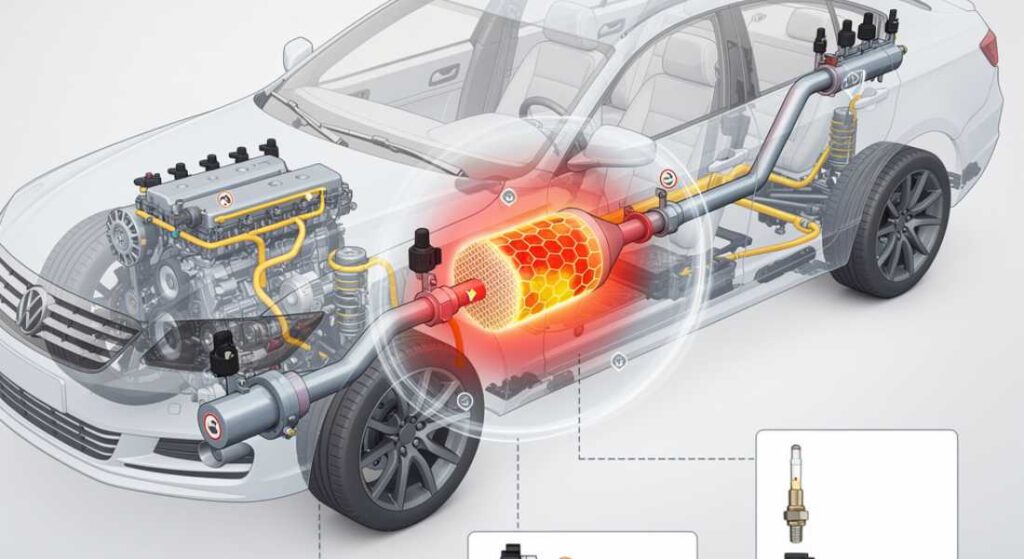
Catalytic Converter Problems
Your catalytic converter contains precious metals that facilitate chemical reactions to clean exhaust gases.
Over time, these components can become fouled by oil consumption, coolant leaks, or using the wrong type of fuel. When the converter can’t operate at its proper temperature or its internal structure becomes damaged, it fails to process sulfur compounds effectively.
A completely failed converter will trigger your check engine light and may cause your vehicle to fail emissions testing. This is often why would my car smell like rotten eggs in the first place.
Fuel System Issues
Problems with your fuel pressure regulator, fuel injectors, or fuel pump can cause your engine to run rich.
This condition floods your cylinders with excess gasoline that doesn’t burn completely. The unburned fuel carries high concentrations of sulfur through your exhaust system, creating those unpleasant smells like rotten eggs in my car.
Understanding why would a car smell like rotten eggs often requires examining the entire fuel delivery system for malfunctions.
Oxygen Sensor Failure
Your vehicle relies on oxygen sensors to maintain the correct air-fuel mixture. When these sensors provide incorrect data to your engine computer, the system compensates by adding more fuel.
This rich-running condition produces excess sulfur compounds that your catalytic converter struggles to process.
Failed oxygen sensors often trigger diagnostic trouble codes that a mechanic can read with a scan tool. This malfunction frequently explains why does my engine smell like rotten eggs.
Old Battery or Electrical Problems
A failing battery can sometimes produce hydrogen sulfide gas, especially if it’s overcharging or has internal damage. While less common than exhaust-related causes, a battery issue can create my car smells like rotten eggs situations, particularly near the engine bay.
Transmission Fluid Issues
Some drivers report car smells rotten eggs scenarios that trace back to transmission problems. Overheated transmission fluid can emit sulfur-like odors, especially in vehicles with transmission coolers integrated into the radiator system.
Air Conditioning Related Sulfur Smells
When your car aircon smells like rotten eggs, this presents a unique diagnostic challenge. The AC system itself doesn’t produce sulfur compounds, but it can distribute odors throughout your cabin.
If your car air conditioner smells like rotten eggs, mechanics will check for exhaust leaks near the fresh air intake or bacterial contamination in the evaporator core.
The my car ac smells like rotten eggs complaint often relates to drainage issues where moisture accumulates and allows microorganisms to grow.
However, if the car smells like rotten eggs when ac is on exclusively, an exhaust system inspection should be your first priority.
How to Diagnose the Problem
Start by noting exactly when why my car smell like rotten eggs becomes most noticeable. Does it happen during acceleration, when the AC runs, or only after the engine warms up? These details help narrow down potential causes.
Check your dashboard for warning lights, particularly the check engine light or emission system indicators. Modern vehicles store diagnostic codes that provide specific information about sensor failures or system malfunctions.
Inspect your exhaust system visually for any obvious damage, rust, or holes that might allow gases to escape in unexpected places. Look under your vehicle for signs of fluid leaks that could indicate transmission or coolant problems.
If you’re comfortable doing so, check your engine oil and coolant levels. Low fluids or contaminated fluids can contribute to catalytic converter damage.
Professional Solutions and Repairs
Catalytic Converter Replacement
If diagnostics confirm a failed catalytic converter, replacement is usually the only permanent solution. This repair can be expensive, with costs ranging from several hundred to over a thousand dollars depending on your vehicle model.
However, driving with a failed converter damages other components and reduces performance, making timely repair important.
Oxygen Sensor Replacement
Replacing faulty oxygen sensors is relatively affordable and can restore proper engine operation. Most vehicles have multiple oxygen sensors, and mechanics will use diagnostic codes to identify which specific sensor needs replacement.
Fuel System Cleaning
If your why does my car smells like rotten eggs problem stems from fuel system deposits, a professional cleaning service might resolve the issue. This process involves running specialized chemicals through your fuel injectors and intake system to remove carbon buildup.
Engine Tune-Up
Sometimes a comprehensive tune-up addresses multiple small problems that collectively cause sulfur odors. Replacing spark plugs, air filters, and fuel filters can improve combustion efficiency and reduce the burden on your catalytic converter.
Preventive Maintenance Tips
Regular maintenance helps prevent why would my car smell like rotten eggs situations from developing. Follow your manufacturer’s recommended service intervals for oil changes, filter replacements, and emission system inspections.
Use quality fuel from reputable stations. Cheap gasoline often contains higher sulfur content and more contaminants that can damage your emission system over time.
Address check engine lights promptly rather than ignoring them. Small problems like a failing oxygen sensor become expensive catalytic converter replacements when left unattended.
Avoid short trips when possible. Your catalytic converter needs to reach operating temperature to function properly. Frequent cold starts without adequate warm-up time prevent the converter from working efficiently.
Keep your engine properly tuned. Misfires, oil consumption, and coolant leaks all contribute to catalytic converter damage that produces sulfur odors.
When to Seek Immediate Help
Some situations require immediate professional attention. If you experience why does my engine smell like rotten eggs along with any of these symptoms, visit a mechanic right away.
Severe loss of power or acceleration capability suggests your catalytic converter may be completely blocked, which can cause engine damage.
Strong sulfur odors inside your cabin rather than just in the exhaust indicate a serious exhaust leak that’s allowing dangerous gases into your breathing space.
Rattling noises from under your vehicle combined with sulfur smells often mean internal catalytic converter damage where broken pieces are moving around inside the housing.
FAQs
Why does my car smell like rotten eggs only sometimes?
Intermittent sulfur odors often relate to driving conditions. Your car smells like rotten eggs when accelerating because increased fuel consumption temporarily overwhelms a weakening catalytic converter.
Cold starts or short trips may not allow the converter to reach optimal operating temperature, causing occasional smell issues. The rotten egg car smell appears most often when your engine works hardest.
Can I drive my car if it smells like sulfur?
While you can technically drive short distances, continuing to operate a vehicle with strong sulfur odors risks further damage. The underlying problem will worsen over time and potentially leave you stranded.
Schedule a diagnostic appointment as soon as possible to prevent more expensive repairs. Remember that is rotten egg smell from car dangerous depends on the severity and location of the leak.
Why does my car AC smell like eggs?
When your car a c smells like rotten eggs, you’re either experiencing an exhaust leak that pulls fumes into the cabin air intake or you have bacterial growth in the AC system.
A mechanic can determine which issue you’re facing by inspecting both systems. Sometimes the ac in car smells like rotten eggs only during initial startup before clearing out.
How much does it cost to fix a rotten egg smell in my car?
Repair costs vary widely depending on the cause. Simple fixes like oxygen sensor replacement might cost a few hundred dollars, while catalytic converter replacement can exceed one thousand dollars.
Getting a proper diagnosis before authorizing repairs ensures you only pay for necessary work. Understanding why would a car smell like rotten eggs helps estimate repair scope.
Is the rotten egg smell harmful to breathe?
Brief exposure to hydrogen sulfide in small concentrations typically causes only temporary discomfort. However, breathing these fumes regularly can lead to headaches, nausea, and respiratory irritation.
If you smell sulfur inside your cabin, ventilate immediately and seek repairs promptly. The rotten egg smell in car dangerous aspect increases with prolonged cabin exposure.
Can bad gas cause a rotten egg smell?
Yes, contaminated or old gasoline with high sulfur content can produce stronger odors when burned. However, this usually resolves after using fresh fuel.
If the smell persists through multiple tanks, mechanical problems are more likely the cause. This explains some temporary why my car smell like rotten eggs situations.
Conclusion
Understanding why my car smell like rotten eggs helps you take appropriate action to protect your vehicle and your health. This distinctive sulfur odor almost always signals a problem with your emission system that needs professional attention.
Whether the cause is a failing catalytic converter, malfunctioning sensors, or fuel system issues, addressing the problem promptly prevents more expensive damage down the road.
Don’t ignore these warning signs. Schedule a diagnostic appointment with a qualified mechanic who can identify the exact cause and recommend the most cost-effective solution.
With proper maintenance and timely repairs, you can eliminate these unpleasant odors and keep your vehicle running safely and efficiently for years to come.